Animal Guides / Reptiles and amphibians
Saltwater crocodile
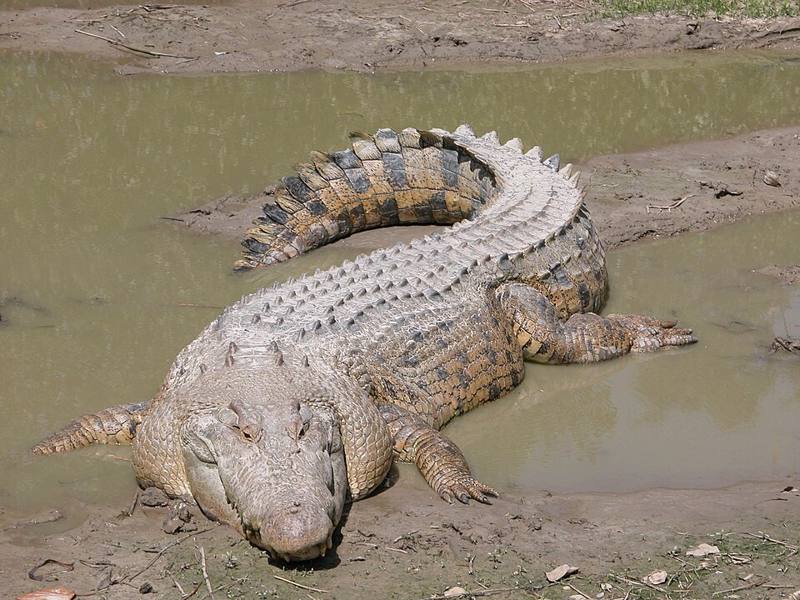
The largest living reptile, with the strongest bite ever measured. Saltwater crocodiles patrol rivers, mangroves and coasts from India to northern Australia.
Quick facts
| Fact | Detail |
|---|---|
| Scientific name | Crocodylus porosus |
| Class | Reptilia (reptiles) |
| Diet | Carnivore: fish, crabs, birds, turtles, wild pigs, buffalo and other mammals |
| Size | Males often 4 to 5 m and can exceed 6 m and 1,000 kg; females usually under 3.5 m |
| Lifespan | Often 70 years or more |
| Range | Eastern India and Sri Lanka through Southeast Asia to New Guinea, northern Australia and some Pacific islands |
| IUCN status | Least Concern |
Habitat
Despite the name, saltwater crocodiles (often called "salties") live in both salt and fresh water. They are most common in tidal rivers, estuaries, mangrove swamps and coastal wetlands, but also move far upstream into freshwater rivers and billabongs and out to sea between islands. Northern Australia, particularly the Northern Territory, has a large and growing population.
Behavior
Saltwater crocodiles are ambush predators. They lie still with only eyes and nostrils above the water, then explode forward to grab prey at the water's edge. Large animals are dragged underwater and drowned, and crocodiles twist their bodies in a "death roll" to tear off pieces they can swallow.
They are territorial, especially large males, which push younger males out of good stretches of river. This forces smaller crocodiles to travel, sometimes out to sea. Tagged crocodiles have used ocean currents to cover hundreds of kilometers along coastlines.
Females build mound nests of mud and plant material, which heat up as the vegetation rots. They guard the nest for around three months, then dig out the hatchlings when they call and carry them to the water in their mouths. Even so, most hatchlings are eaten by fish, birds, monitor lizards and other crocodiles.
Body and senses
- Bite: in a 2012 study measuring bite forces of crocodilians, a large saltwater crocodile produced the strongest bite force ever recorded for a living animal, around 16,000 newtons.
- Salt glands: glands on the tongue remove excess salt, which lets them live in seawater for long periods.
- Sense organs: small dark pits on the scales are pressure and touch receptors that detect ripples in the water.
- Breath-holding: they usually dive for a few minutes, but resting crocodiles can stay underwater for an hour or more.
Surprising facts
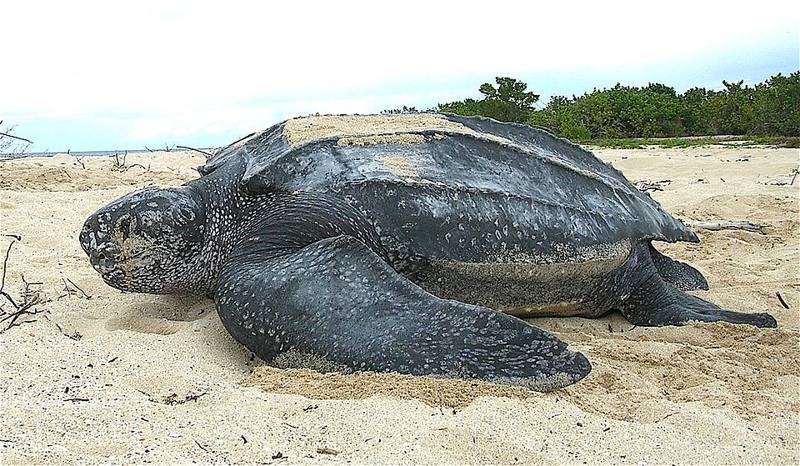
- The sex of crocodile hatchlings depends on nest temperature, as in many turtles, such as the leatherback.
- Crocodiles are more closely related to birds than to lizards. Both groups are archosaurs, the same lineage that produced dinosaurs.
- A crocodile can go months without food by slowing its metabolism.
- Crocodiles cannot chew. They swallow chunks whole and swallow stones that may help with digestion or balance.
People and crocodiles
Saltwater crocodiles were hunted heavily for their skins until the 1970s, when legal protection in Australia and elsewhere allowed populations to recover. That success means crocodiles now live close to towns and campgrounds in northern Australia. Attacks on people are rare but often fatal, and nearly always happen when people swim, fish from the water's edge or camp close to riverbanks.
In crocodile country, obey warning signs, never swim in rivers or estuaries, stand well back from the water's edge, never clean fish or leave food near the water, and do not use the same spot by the water repeatedly. Read our responsible wildlife watching checklist.