Peregrine falcon
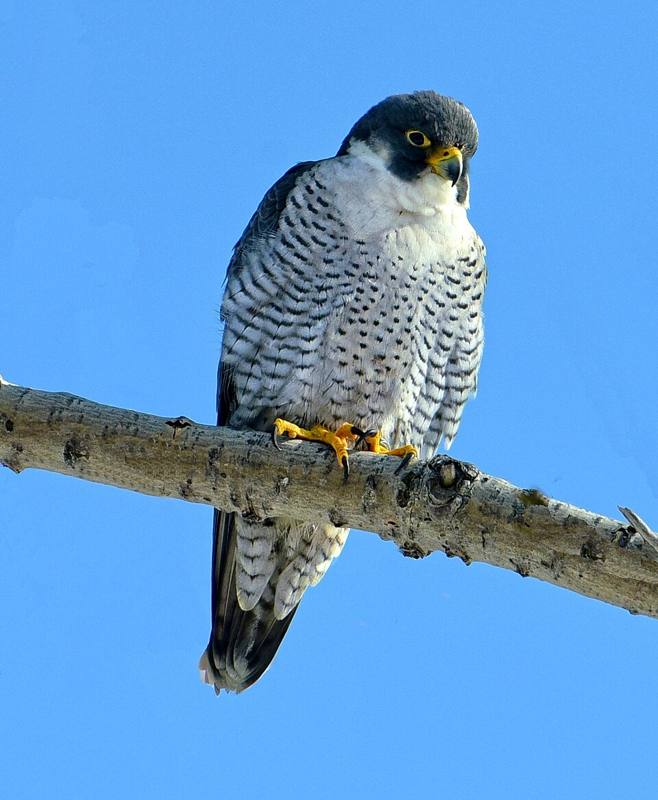
The fastest animal on Earth, diving at over 300 km/h to strike birds in midair. Here is how its body handles that speed and how it took over our cities.
Quick facts
| Fact | Detail |
|---|---|
| Scientific name | Falco peregrinus |
| Class | Aves (birds) |
| Diet | Mostly birds caught in flight, such as pigeons, ducks, shorebirds and songbirds |
| Size | Wingspan about 0.75 to 1.2 m; weight roughly 0.33 to 1.5 kg, females much larger |
| Lifespan | Often under 10 years in the wild; some exceed 15 |
| Range | Every continent except Antarctica |
| IUCN status | Least Concern |
Habitat
Peregrines are one of the most widespread birds in the world. In the wild they nest on cliff ledges near open country where birds are plentiful: coasts, river gorges, mountains and tundra. The name means "wanderer," and Arctic-breeding peregrines migrate very long distances, some flying between the Arctic and South America each year.
Cities turned out to be perfect for them. Tall buildings, bridges and cathedrals act like cliffs, and pigeons provide a steady food supply. Many large cities in North America and Europe now have resident pairs, often watched by nest cameras.
Behavior
The peregrine's signature hunt is the stoop, a high-speed dive from far above its target. The falcon climbs high, folds its wings close to its body and drops, accelerating to extraordinary speeds before striking the prey with its feet or grabbing it. Speeds over 320 km/h (200 mph) have been measured in stoops, making the peregrine the fastest animal known. In level flight it is much slower, closer to the speeds of other fast birds.
Pairs often stay together for years and defend their nest site loudly. They do not build a nest; the female lays three or four eggs in a shallow scrape in gravel or debris on a ledge.
Built for the dive
- Body shape: pointed wings and a streamlined body cut drag when folded.
- Nostrils: small bony cones in the nostrils are thought to help manage the airflow and pressure at high speed.
- Eyes: a third eyelid, the nictitating membrane, sweeps across to clear and protect the eye while still letting the bird see.
- Vision: like other raptors, peregrines have far sharper vision than people and track prey from great distances.
- Bill: a notch on the upper bill, called a tomial tooth, helps dispatch prey quickly.
Surprising facts
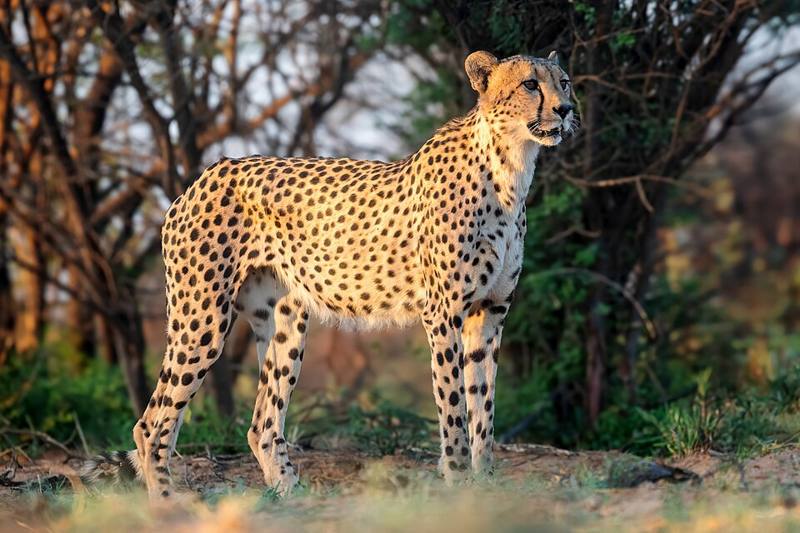
- A cheetah is the fastest runner, but a stooping peregrine is several times faster.
- Falcons are more closely related to parrots and songbirds than to hawks and eagles, according to DNA studies, even though they look alike.
- Peregrine falcons have been used in falconry for thousands of years and are still flown at some airports to scare flocks of birds away from runways.
Threats and conservation
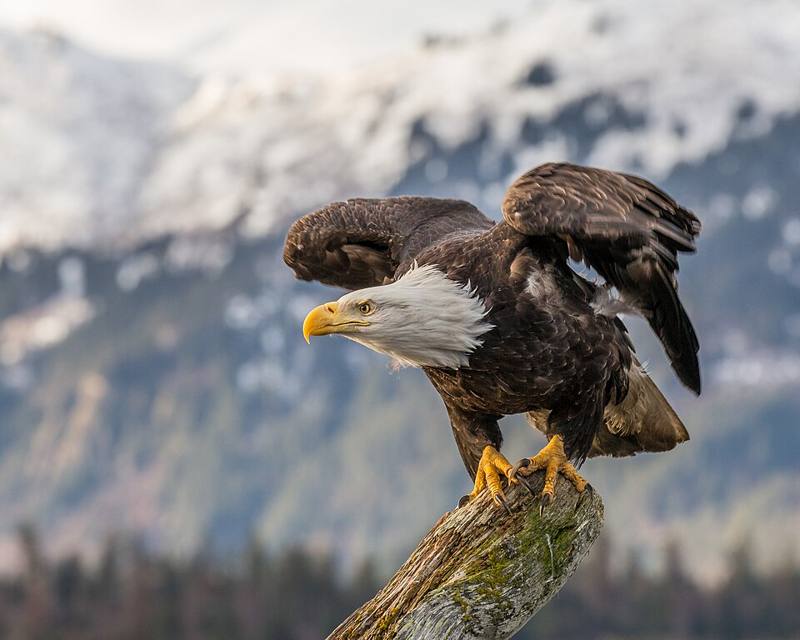
Like the bald eagle, the peregrine suffered a dramatic crash in the mid-20th century. DDT and related pesticides built up in its prey and caused thin eggshells and breeding failure. By the 1970s the peregrine had disappeared as a breeder from the eastern United States.
Bans on DDT and large captive-breeding and release programs brought the species back. Many released birds settled on city buildings and bridges. The American peregrine falcon was removed from the US endangered species list in 1999, one of the great comeback stories in conservation. Today, peregrines still face illegal persecution in some areas, and contaminants in food webs are monitored closely.
Many cities stream live cameras of peregrine nests on office towers each spring, so you can watch chicks hatch and fledge without disturbing them.